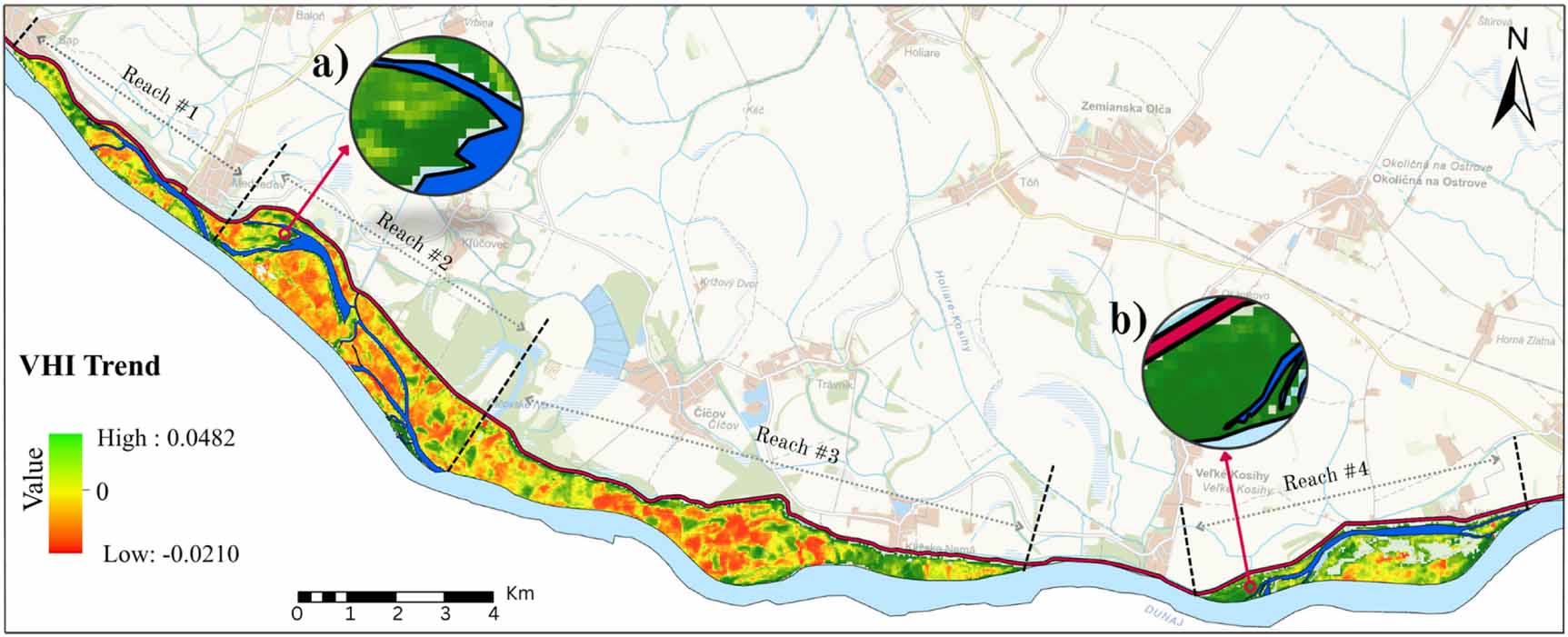
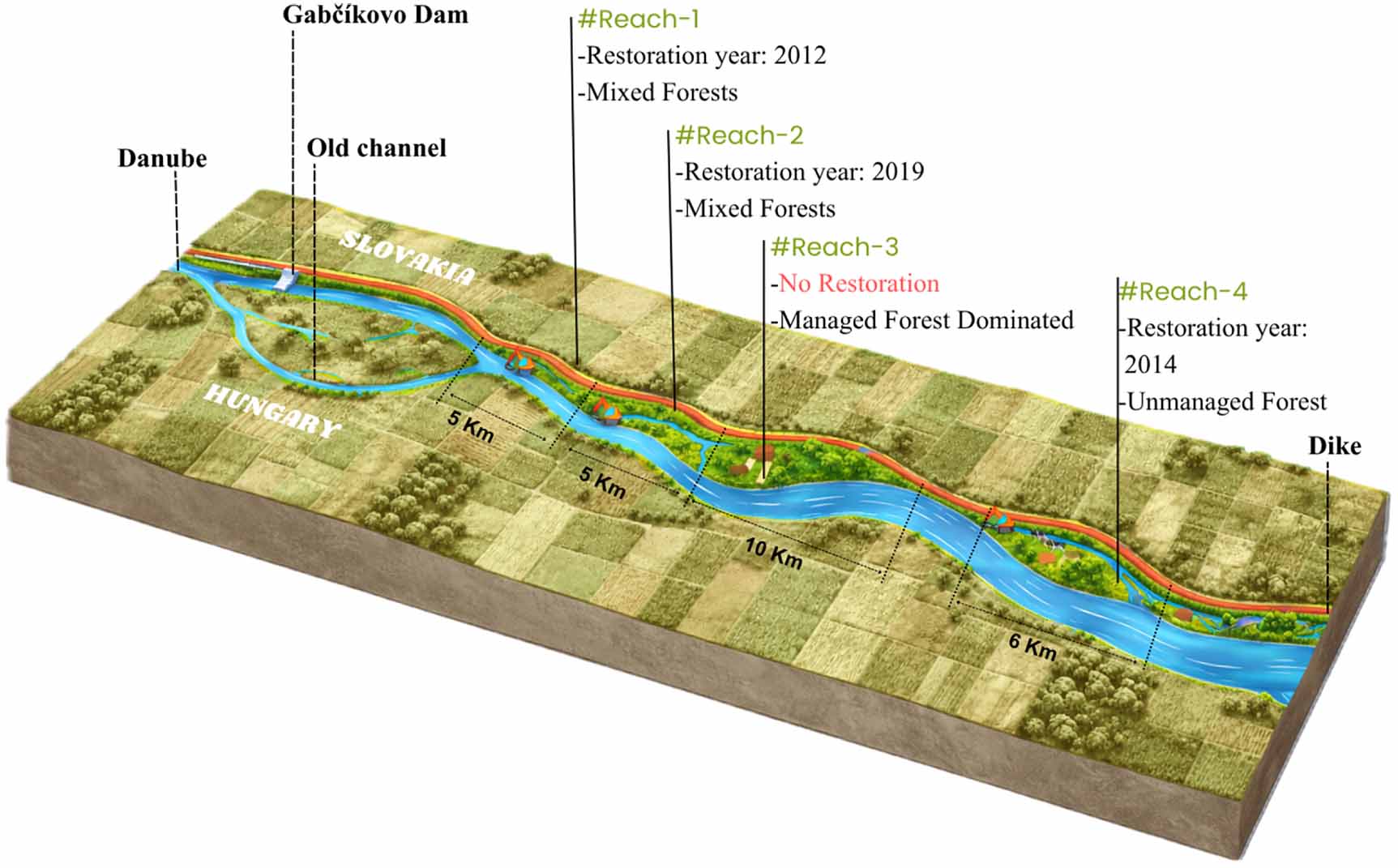
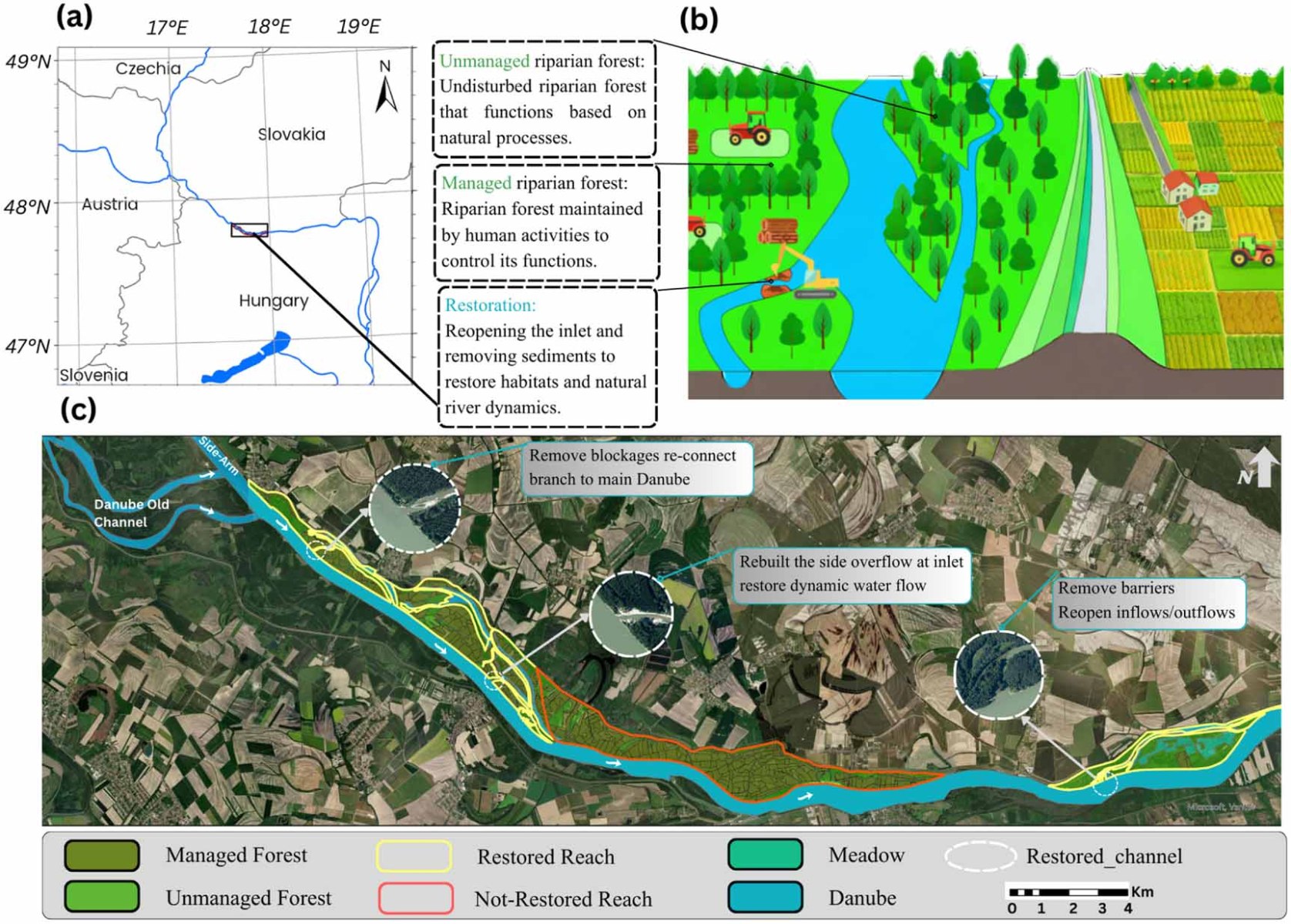
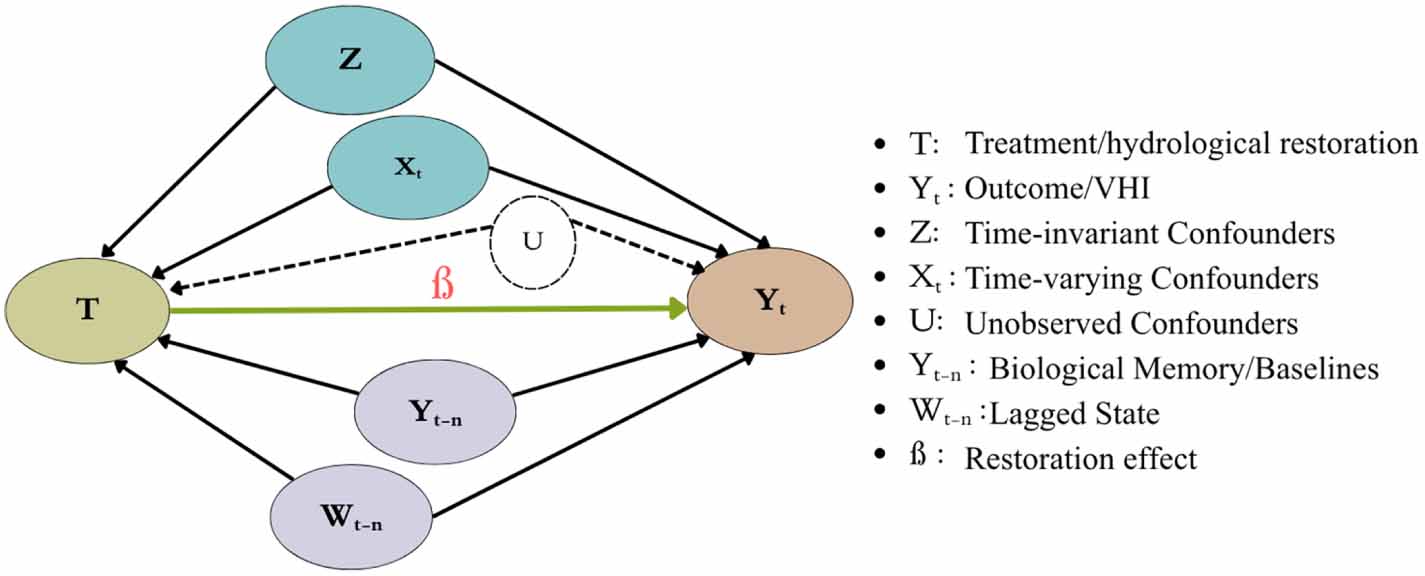
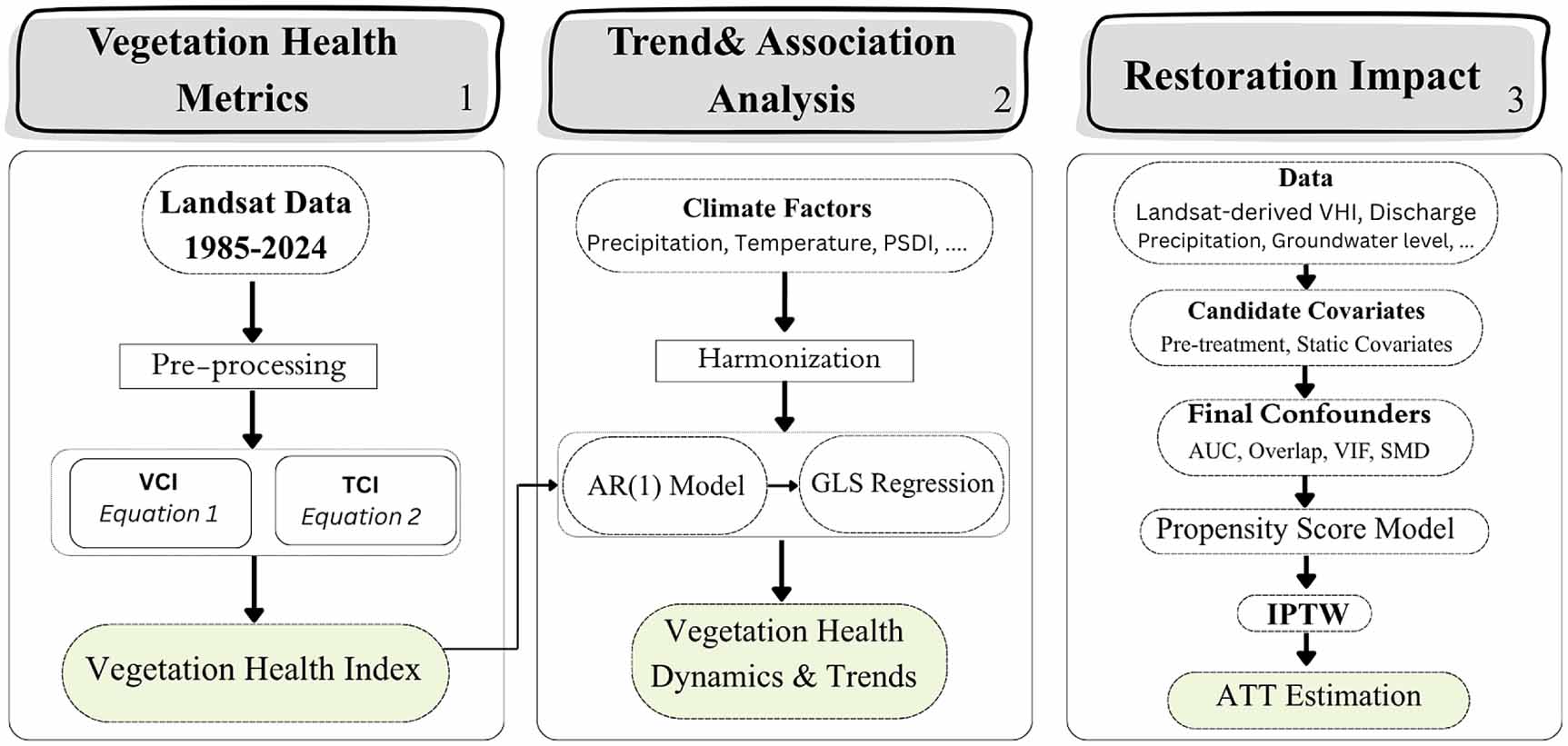
Floodplain forests along the Danube are facing changes in water regimes, human disturbances, and increasingly warm and dry conditions. An international research team led by our colleague Hamid Afzali analysed four decades of satellite observations to distinguish the effects of climate variability and human activities from the benefits of ecological restoration measures.
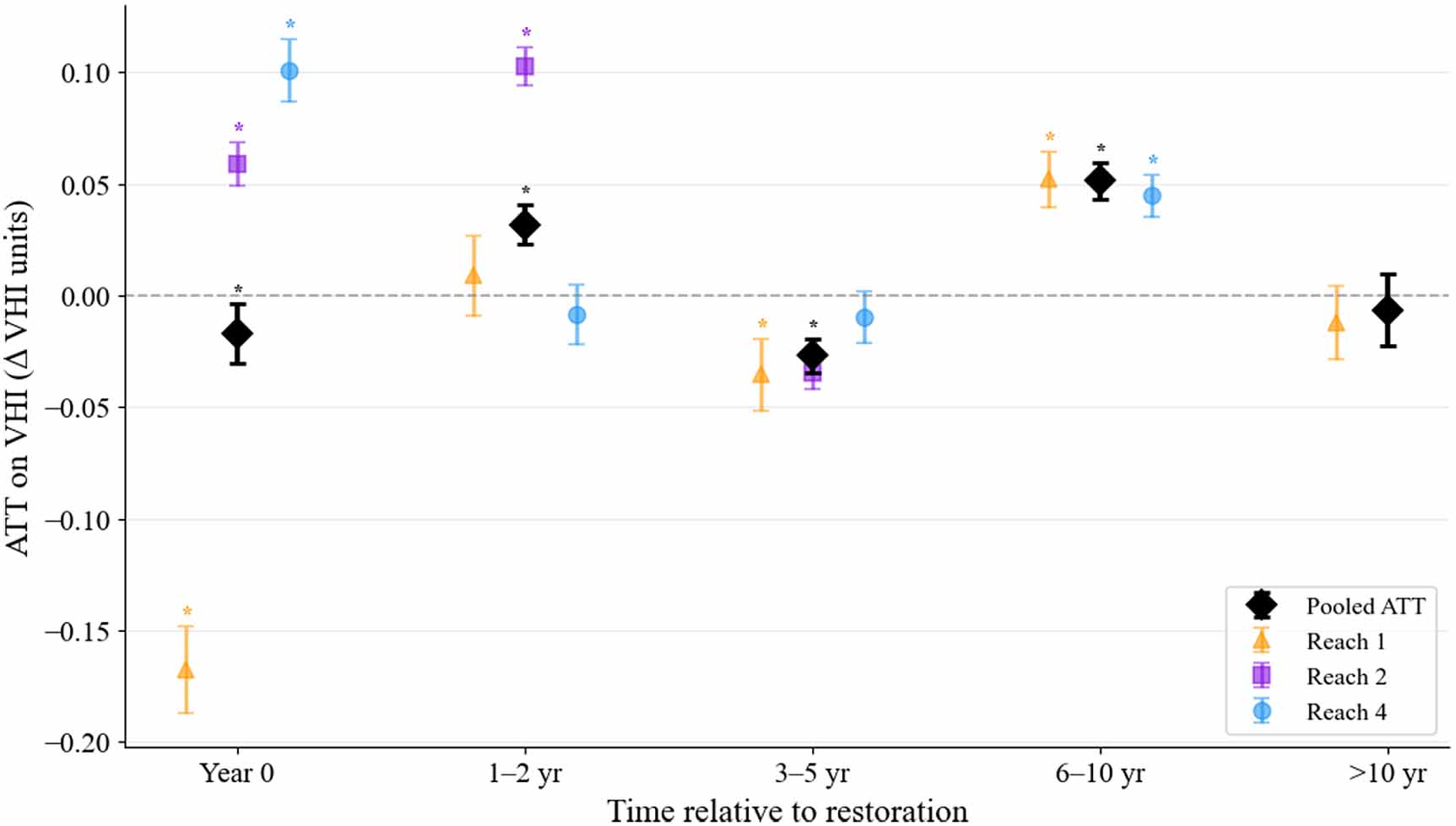
Vegetation health in the Danube floodplain cannot be explained by annual precipitation alone. Over the past decades, river flow regimes, connections between side channels and the main river, and forest management practices have changed considerably in many locations. Moreover, the benefits of restoring natural water regimes often become apparent only gradually.
The authors used satellite observations of vegetation health and an analytical approach to estimate the effects of restoration interventions against the background of climatic variability. The research reveals measurable, although gradual, vegetation recovery in areas where hydrological connectivity of floodplain forests has improved. At the same time, it highlights the increasing pressure of drought as a major ongoing challenge.
An important contribution of the study lies in its methodology. Simply comparing satellite images taken “before and after restoration” may not be sufficient, particularly when climatic conditions have changed or when the study sites differed from the outset. Combining satellite time series with causal inference methods provides a more robust basis for assessing the actual benefits of restoration.
Why It Matters
- For river ecosystem restoration: Restoration measures should be evaluated over the long term, taking climatic variability into account.
- For landscape management: Satellite data enable large-scale monitoring of floodplain vegetation without requiring comprehensive field measurements across the entire area.
Publication: Afzali, Hamid & Kuemmerle, Tobias & Baumann, Matthias & Hudcovič, Marcel & Michaleje, Lukáš & Rusnák, Miloš. (2026). Climate variability and human disturbances as drivers of vegetation health in the riparian zone of the Danube. Environmental Research Letters, 21(12), 124016. 2025 Impact Factor: 5.4; Scopus.
Link: doi.org/10.1088/1748-9326/ae798a
The study was conducted as part of the following research projects:
- VEGA 2/0016/24 — Assessment of human-induced and climate-driven transformations of watercourses using high-precision 3D geospatial data
- APVV-23-0265 — 3D Technologies and Machine Learning Methods for Environmental Monitoring and Assessment of River Quality
Prepared by: Tomáš Goga | With the assistance of GPT-6 Astra.