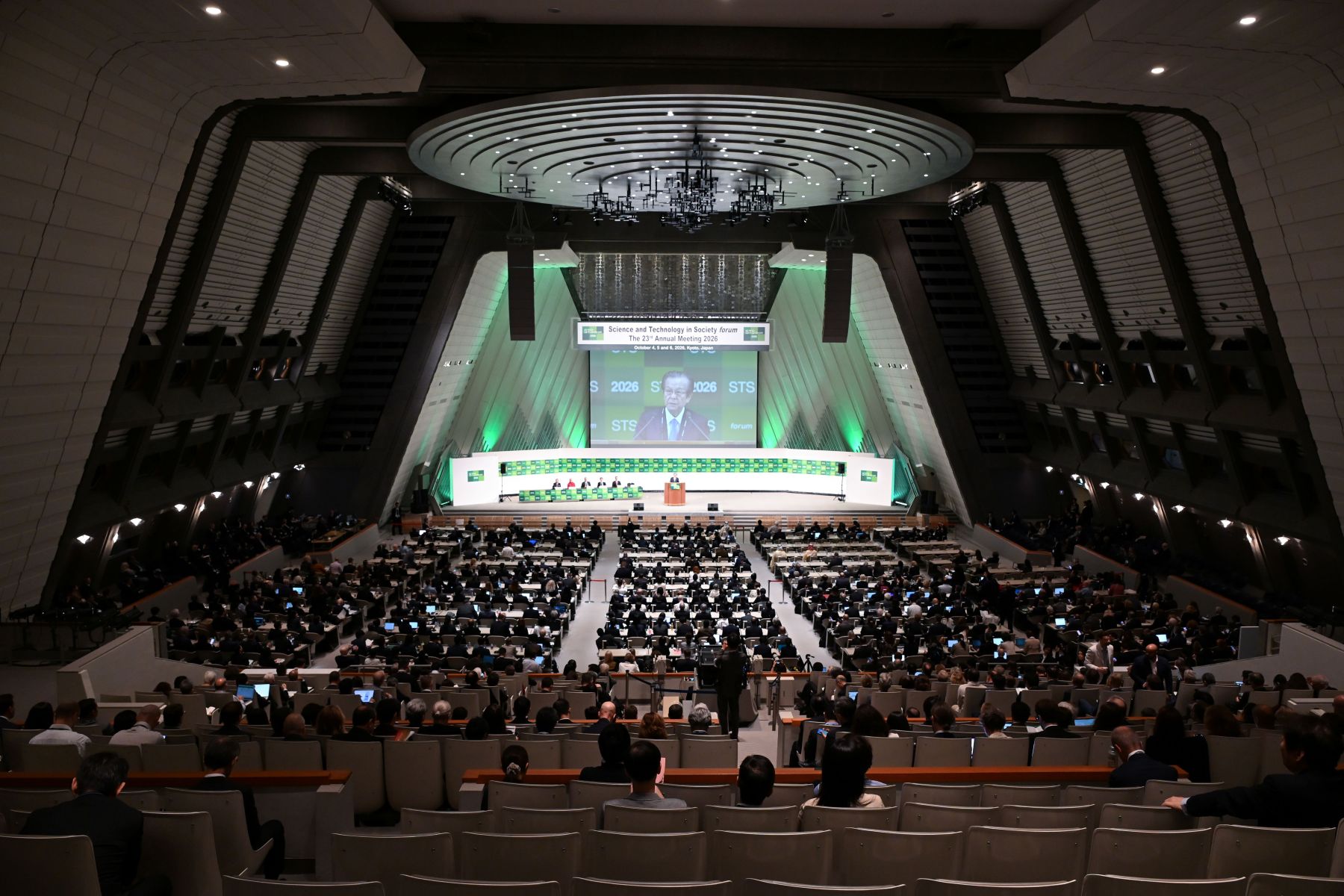
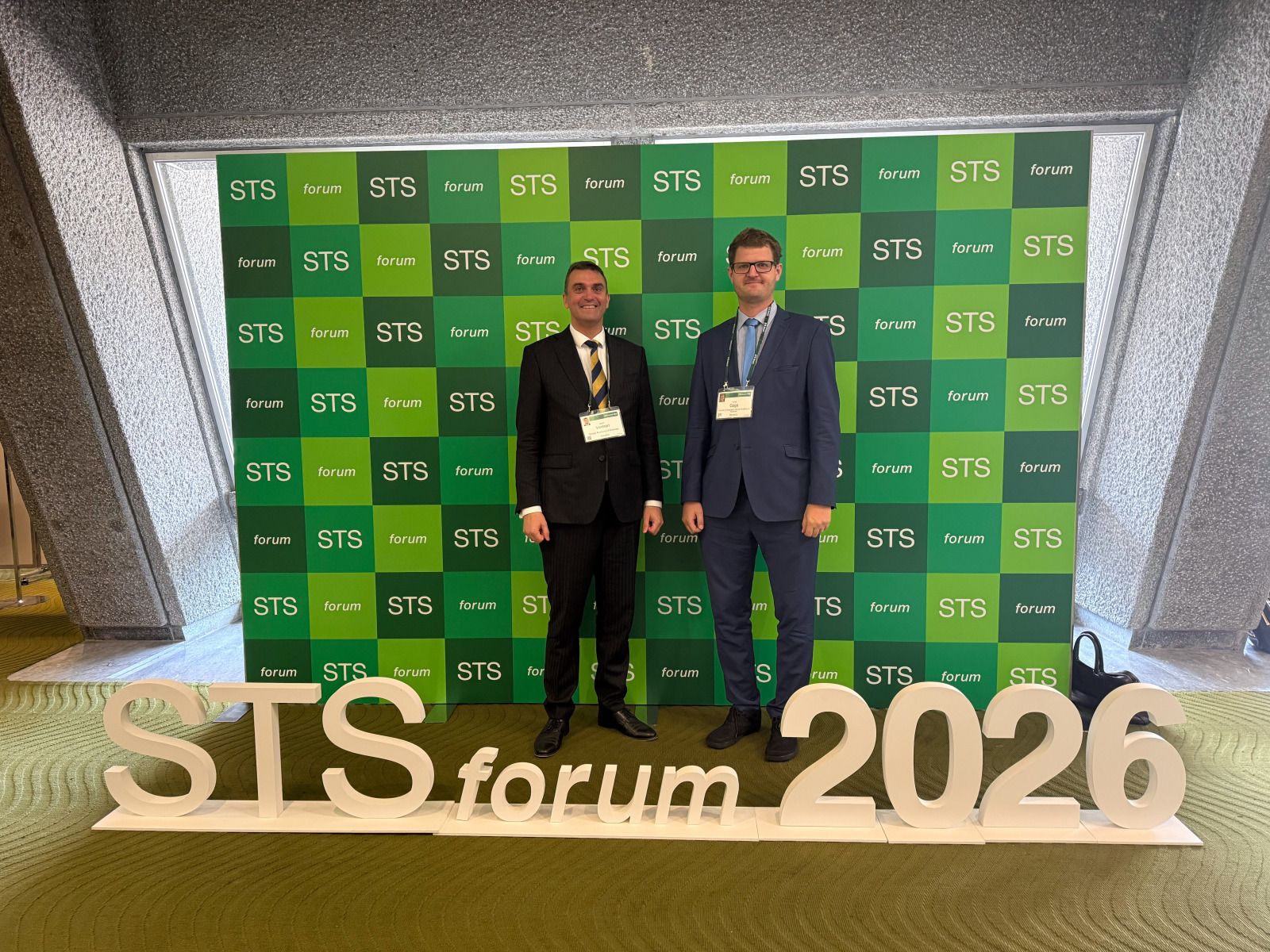
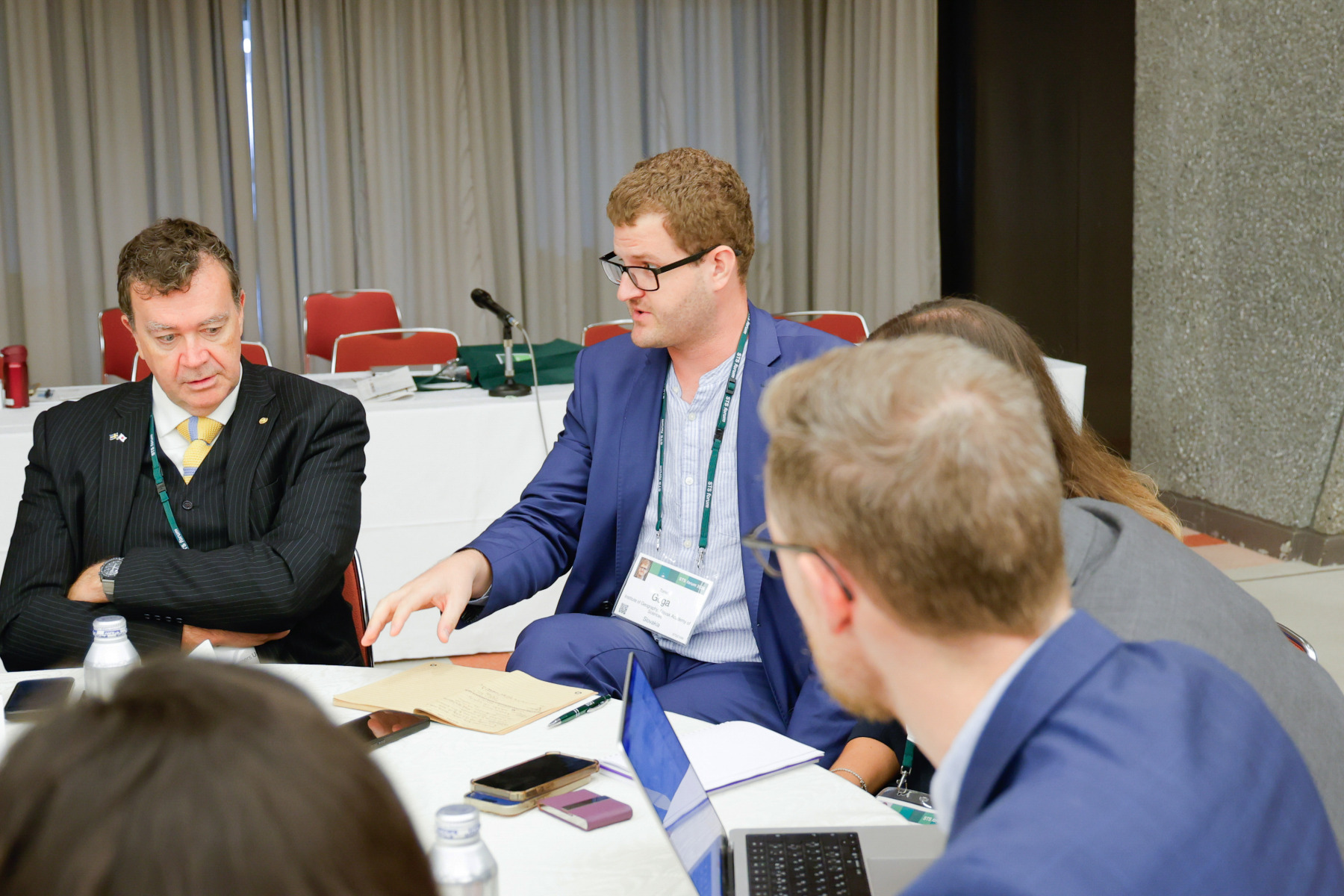
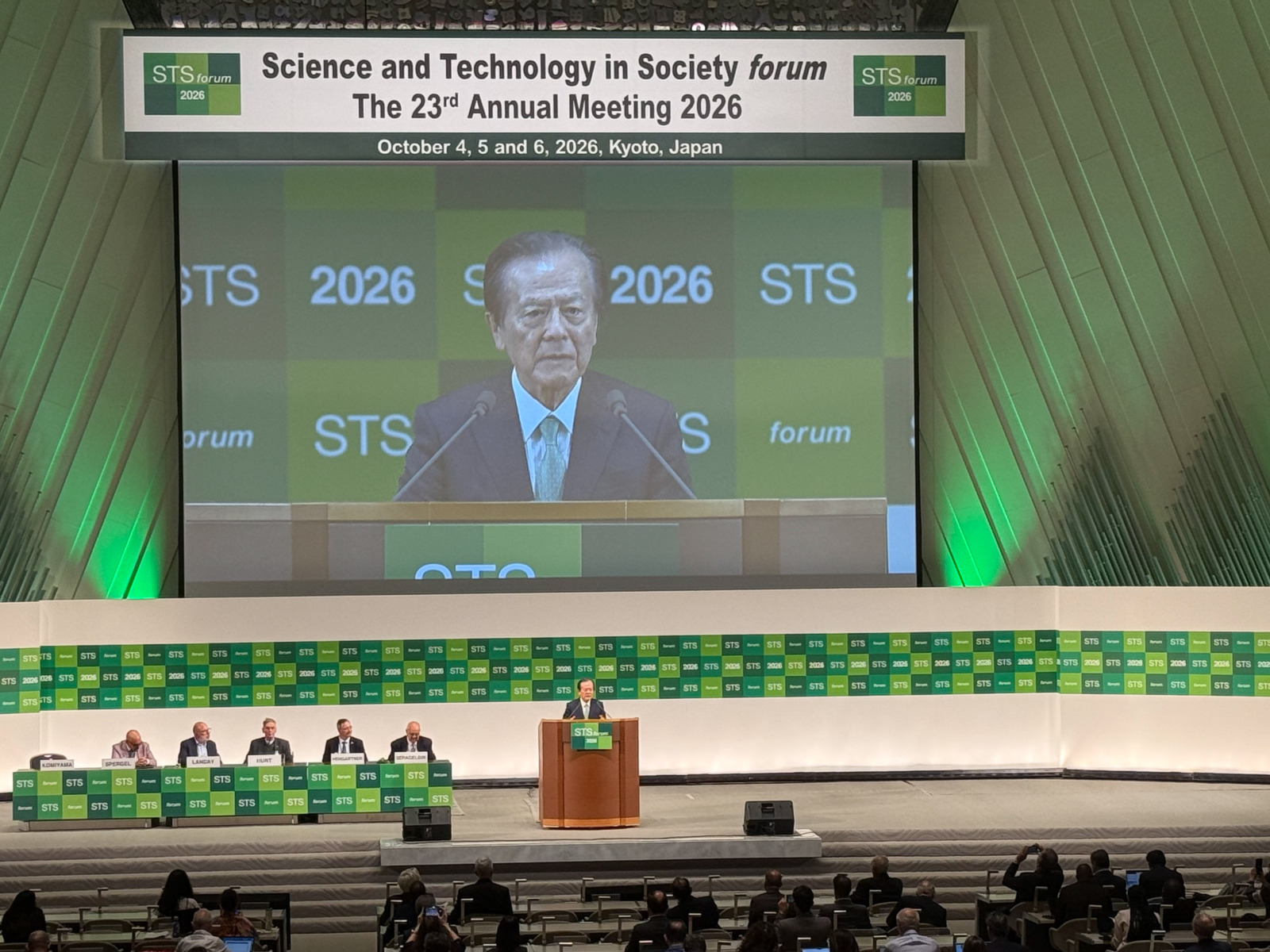
How can we maintain public trust in scientific knowledge, ensure long-term support for research and harness the potential of artificial intelligence for the benefit of society? These were among the key questions discussed at the 23rd Annual Meeting of the prestigious international Science and Technology in Society (STS) Forum, held on 4–6 October 2026 in Kyoto, Japan. The Slovak Academy of Sciences was represented by its President, Martin Venhart, and early-career researcher Tomáš Goga, who was also selected to participate in the international Young Leaders programme.
Republished in full from the website of the Slovak Academy of Sciences.
The STS Forum is one of the world’s leading platforms connecting science, policymaking and industry. Since its establishment in 2004, it has provided a space for dialogue among prominent scientists, including Nobel laureates, government representatives, and leaders of universities, research institutions and technology companies.
This year’s meeting, entitled Navigating Tectonic Shifts in Science, Technology, and Society, addressed rapid technological change, growing geopolitical tensions and global environmental challenges. Discussions focused not only on new scientific discoveries but, above all, on how to ensure that scientific and technological progress delivers lasting benefits to society as a whole.
Science needs trust and stable institutions
One of the central themes of the forum was trust in scientific knowledge and the role of research institutions in a changing society. The plenary session Why Trust Science? explored questions concerning communication between the scientific community, the public and policymakers.
Discussions repeatedly highlighted the need to build long-term research capacity and preserve opportunities for fundamental research, whose outcomes cannot always be predicted or immediately assessed in economic terms. Stable scientific institutions are an indispensable part of society’s ability to respond to emerging challenges. This debate is particularly relevant to the Slovak Academy of Sciences. Supporting high-quality fundamental and applied research, developing international cooperation and strengthening the credibility of scientific institutions are essential prerequisites for the competitiveness of Slovak science.
Artificial intelligence accelerates scientific discovery but cannot replace human curiosity
Artificial intelligence received considerable attention, particularly during the plenary session Lights and Shadows of AI and the thematic session AI for Research. Participants highlighted AI’s ability to process large datasets, identify previously unknown relationships and accelerate scientific discovery. At the same time, they emphasised the importance of maintaining human oversight in decision-making, the critical evaluation of results and the formulation of research questions.
A key message was that scientific progress depends on more than computational power. Curiosity, creativity, the ability to work with uncertainty and the courage to explore questions without predetermined answers remain fundamental. “What resonated most strongly with me was the idea that, if we truly want to harness the potential of artificial intelligence, we need not only high-quality data and reliable, secure computing infrastructure, but above all strong research institutions, people capable of asking the right questions, and an environment that supports long-term research,” explains Tomáš Goga, Deputy Director of the Institute of Geography of the Slovak Academy of Sciences.
Climate change, food security and landscape resilience
Sustainability, energy, the protection of natural resources, and food and water security also featured prominently in the programme.
The session Agriculture, Food, and Water Security highlighted that the future of food systems cannot be assessed solely in terms of productivity. Climate change, water scarcity, changing agroecological conditions and disruptions to international supply chains are increasing the importance of resilience and regionally adapted solutions.
Discussions stressed the need to diversify agricultural production, promote sustainable land and water management, and deploy technological innovations in ways that reflect local environmental and socioeconomic conditions.
These challenges are directly relevant to research conducted at environmentally oriented institutes of the Slovak Academy of Sciences. Earth observation, geographic information systems, long-term environmental monitoring and landscape change modelling provide essential evidence for assessing climate risks, monitoring agricultural land and supporting decisions on natural resource management.
Young scientific leaders in dialogue with Nobel laureates
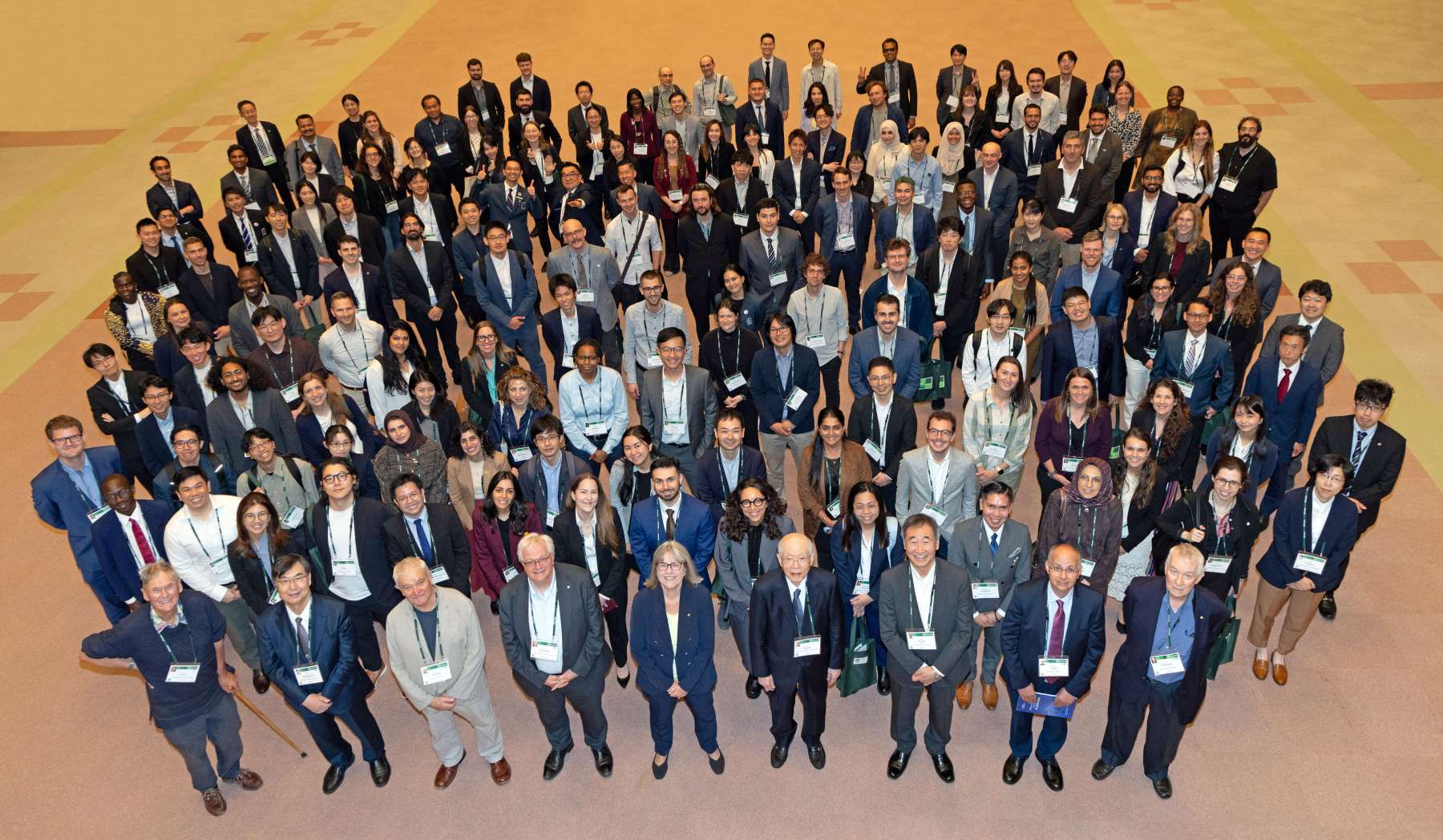
The Young Leaders programme, held on 3 October 2026, on the eve of the main forum, was a dedicated part of the STS Forum. Tomáš Goga from the Institute of Geography of the Slovak Academy of Sciences was invited to participate as one of the selected representatives of the next generation of scientific leaders.
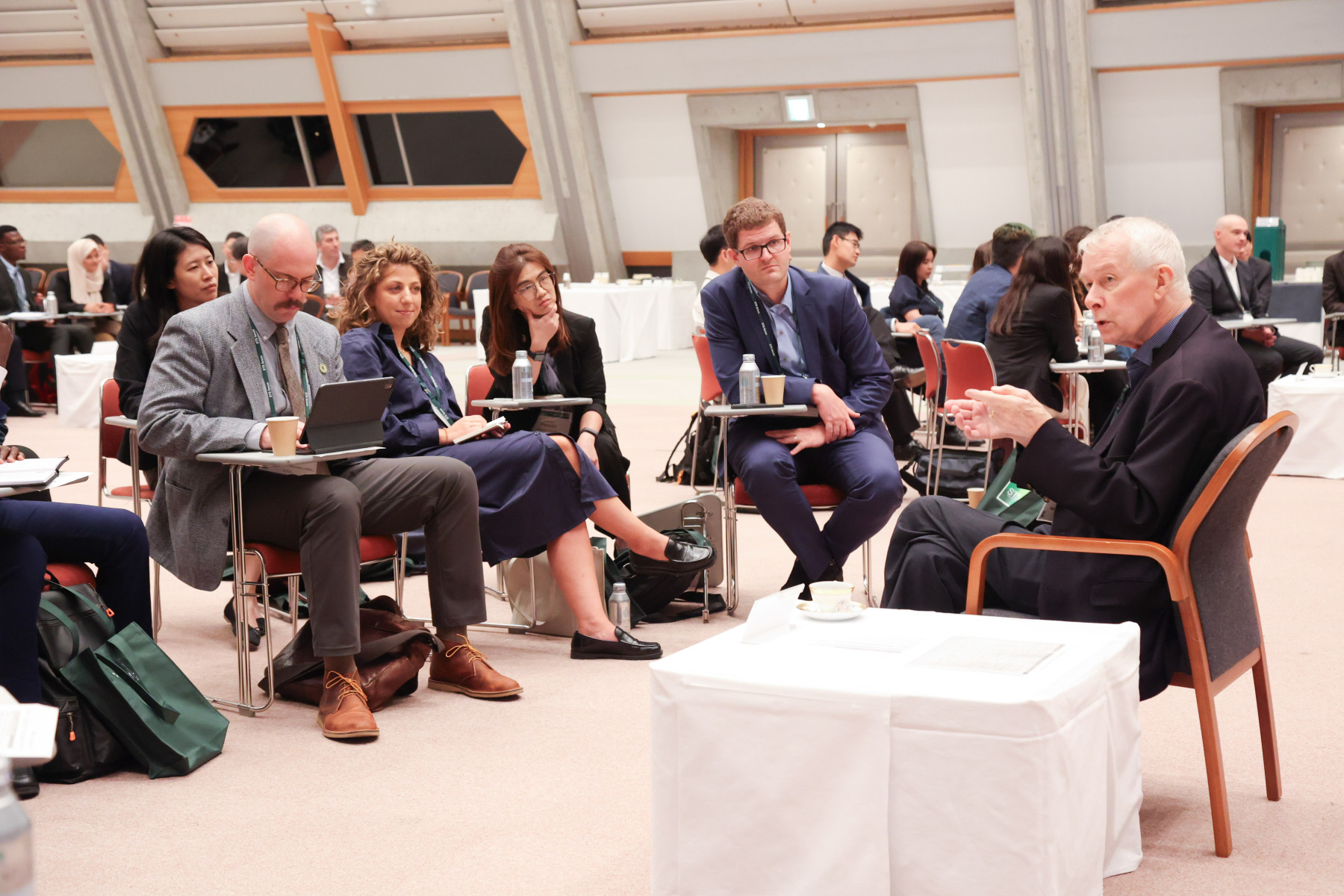
The programme brought together young researchers from different countries and included a special dialogue with Nobel laureates. Participants discussed scientific careers, academic freedom, the importance of mentoring and the responsibility of scientists towards society.
Among the participants in the discussion was Canadian physicist Donna Strickland, the 2018 Nobel Prize laureate in Physics. She emphasised the importance of scientific curiosity, an open working environment, effective mentoring of young researchers and maintaining a healthy balance between scientific careers and personal life.
The discussions reinforced the message that high-quality research depends not only on technology and financial resources but also on an environment that encourages independent thinking, collaboration and a willingness to challenge established assumptions.
Science diplomacy and international cooperation as essential priorities
The future of science diplomacy was another important topic at the forum. Amid growing geopolitical tensions and technological competition, international scientific cooperation is facing increasing pressure.
Nevertheless, participants repeatedly emphasised that no country has a monopoly on scientific discoveries. Addressing climate change, the energy transition, health risks and food security requires cooperation across national borders, disciplines and institutions.
The participation of Martin Venhart, President of the Slovak Academy of Sciences, and Tomáš Goga, an early-career researcher from its Institute of Geography, at the STS Forum 2026 provided an opportunity to engage the Slovak scientific community in international discussions on strategic questions concerning the future of research. It also underscored the importance of active Slovak participation in global events bringing together leaders of scientific institutions and the next generation of research leaders.
Prepared by: Tomáš Goga, Institute of Geography, Slovak Academy of Sciences.