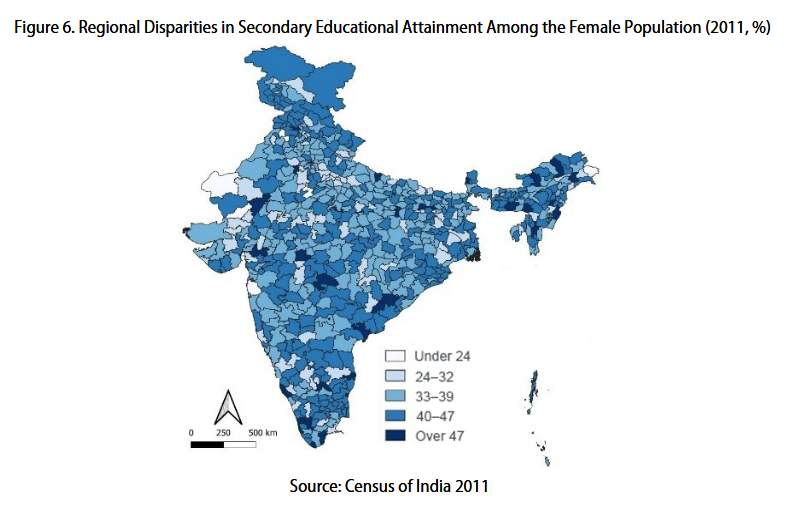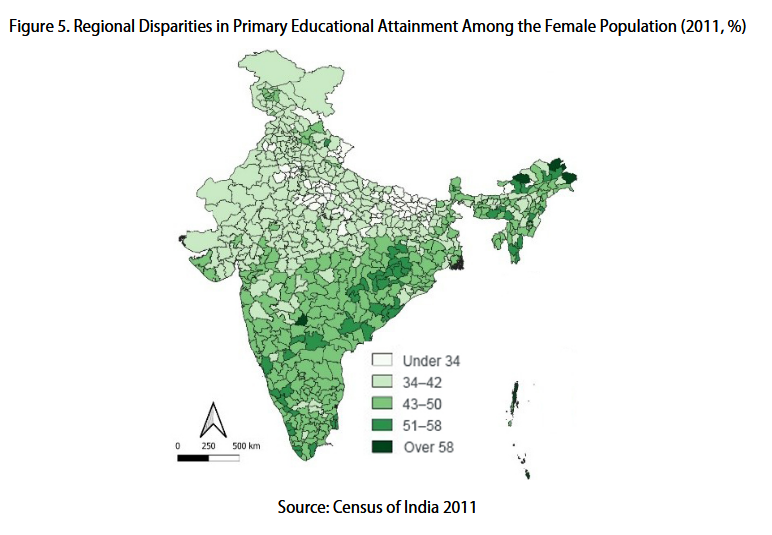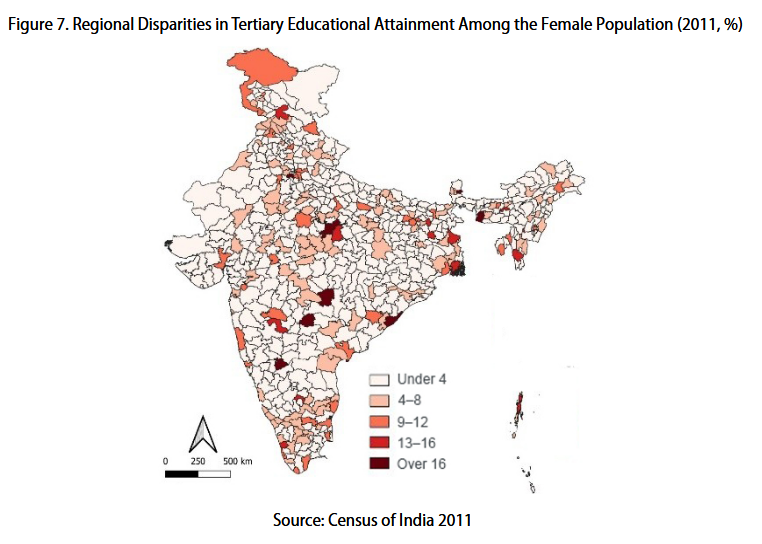




How have women’s education levels and rates of domestic violence changed over time in India? What is the relationship between women’s education and the incidence of domestic violence or dowry-related violence? How do regional differences in education correlate with spatial patterns of domestic violence, as revealed by GIS mapping?
Education is a key pathway to women’s empowerment, yet in India, despite rising literacy rates, many girls remain vulnerable to domestic violence and dowry-related violence (Pushpam, 2024). Although education can build confidence, awareness, and independence, social factors such as patriarchy, male dominance, alcohol abuse, and discriminatory norms continue to fuel intimate partner violence (IPV). Research shows that women who are employed, belong to marginalized communities, or are victims of child marriage face a higher risk of abuse, while higher education, economic status, rural residence, and decision-making autonomy can reduce IPV. However, without broader societal changes, education alone cannot combat deeply entrenched cultural inequalities. This study examines how trends in women’s education and domestic violence have evolved over time, using data from GIS, the census (2001 and 2011), the National Crime Records Bureau (NCRB), and the National Family Health Survey (NFHS). By analyzing temporal and regional differences, the research highlights the need for targeted interventions, community outreach, and policies that promote gender equality and women’s empowerment.
An article by our doctoral student, Iffat Sadiya – GIS-Based Longitudinal Analysis of Female Education and Domestic Violence in India is freely available on the website of the journal Modern Geográfia (indexed in WoS Emerging Sources Citation Index).
The article is part of research carried out within the project:
- VEGA 2/0008/24 – Social and Spatial Aspects of Transport Exclusion in Slovakia
Text: Iffat Sadiya